
Commercial HVAC Ductwork Maintenance Tips to Improve Efficiency & Airflow
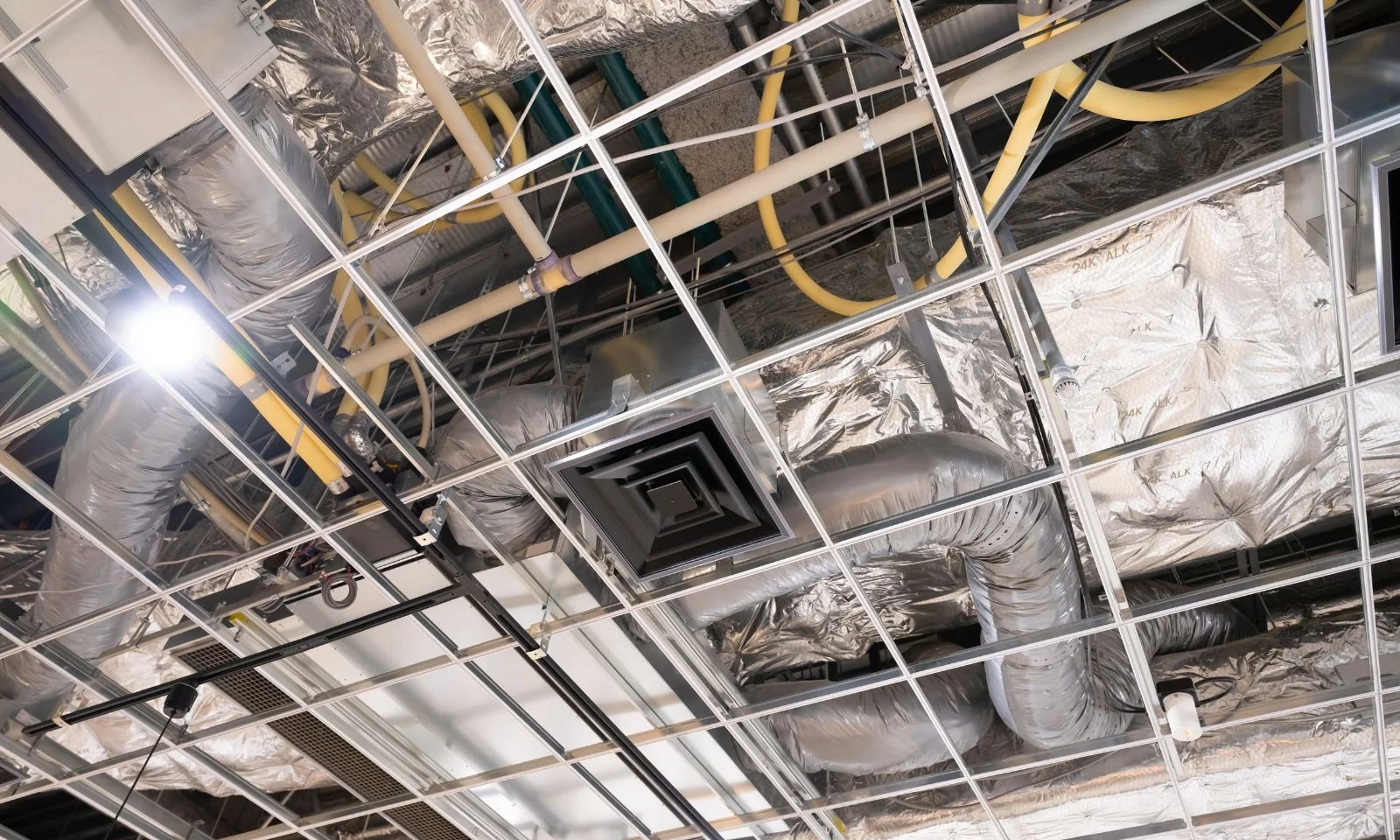
Dirty or damaged ductwork in your commercial building reduces your HVAC system's efficiency and lowers air quality.
Routine inspections and regular maintenance prevent minor ductwork issues from turning into expensive repairs.
Lockmer Sheet Metal's expert technicians repair and remediate damaged ductwork to keep your HVAC operating at optimal levels.
If you owned a brand-new BMW, you'd never dream about skipping the regular maintenance. First of all, you'd invalidate your warranty. But more importantly, you want your Beemer hummin' down the road when you're out for a spin.
Why wouldn't you take the same approach with the even more expensive system that's most likely keeping you comfortable right now?
That maze of ductwork buzzing around your head, whether seen or unseen, is doing miraculous work of providing comfort and quality air in your commercial building. Regular HVAC ductwork maintenance would ensure it maintains a comfortable temperature, cycles quality air for your customers and employees, and saves money.
Lockmer Sheet Metal helps commercial businesses, large and small, throughout the Butte region with ductwork fabrication, repair, and replacement, as well as HVAC-related support, to maintain optimal HVAC system performance.
Why Commercial HVAC Ductwork Maintenance Matters
Providing adequate climate control throughout commercial buildings offers a number of challenges. Your commercial building may feature vast open spaces that require massive air circulation. Or it could be chopped up into smaller areas for office or retail space. Maybe it's filled with equipment that runs counter to your heating and cooling system.
Hopefully, your HVAC system was designed to overcome whatever challenges your commercial property faces, but it still must be maintained to continue to service adequately and efficiently.
Dust and dirt accumulate in ductwork, straining its ability to operate efficiently. Metal expands and contracts during different seasons, placing stress on joints and seals. Buildings settle, causing slight shifts in the position of ductwork. Even operator errors occur from time to time, when heavy equipment may bump a duct, causing dents or split seams.
Periodic inspections of your ductwork can detect issues early, so they can be fixed before the problem grows larger and requires expensive repairs.
Common Commercial Ductwork Issues that Hurt Efficiency
When you are busy managing a property and/or running a business, you probably don't stop to think about the symptoms that will crop up with your HVAC system. But you're sure to notice them when they start affecting employees, customers, vital equipment, or your utility bills.
You might experience uneven climate control, hot offices on one side of the building or a cold retail space on the other end. You might notice the system cycling on and off more frequently. Your ductwork could start sounding noisier or emitting strange or loud noises. You will certainly wonder if your utility bills start climbing for no apparent reason.
All of these issues could indicate a problem growing in your HVAC ductwork:
Dust buildup: Dust affects the efficiency of your unit as it slows or reduces the flow of air through your ductwork and decreases air quality.
Air leaks: Air escaping through bad joints, broken seals, or cracked ducts will heat and cool portions of your building that don't need it and reduce air to the portions that do.
Airflow restrictions: Damage sections or blocked vents restrict airflow, making your unit work harder and less efficiently.
Poor insulation: Warm and cool air will naturally escape through the surface of the ductwork if it is poorly insulated or if old insulation has lost its effectiveness.
HVAC Duct Maintenance Tips for Better Airflow and Indoor Air Quality
Maintaining healthy ductwork is the surest way to ensure your heating and cooling system continues to operate at peak efficiency throughout Montana's weather extremes.
Your staff can perform many routine ductwork checks and maintenance, but sometimes you're best served by calling in professionals for evaluation and repair. Best practices for optimizing your HVAC ductwork's output include:
Replace filters on schedule: This reduces strain on your HVAC system and lessens dust in the ducts.
Clean around vents and returns: Keeping vents and returns free of debris protects filters and improves air flow.
Check for visible gaps or damage: Pay particular attention to joints and corners.
Inspect insulation: Make sure your insulation remains hearty and shows no gapping.
Monitor air flow from room to room: This is often the first indication of damaged or clogged ducts.
Schedule routine inspections: A professional inspection of your ductwork is the best way to catch problems before they cause poor performance and costly repairs.
When you discover issues with your HVAC system that may be related to ductwork, calling a professional ensures the problem is properly analyzed and fixed the first time.
When to Call Lockmer Sheet Metal for Ductwork Repair, Fabrication, or Replacement
Once you've done your due diligence and tried to address nagging HVAC problems, such as uneven temperatures, weak airflow, poor air quality, loud duct noises, escalating utility bills, etc., call the ductwork experts at Lockmer Sheet Metal. Our crews will fully examine your system to determine the causes and outline the best solution.
From installation to expansion to repair, our expert technicians have the knowledge and skill to address problems, from minor repairs to major replacements, if they find a system was improperly designed.
Contact us for a consultation to determine the best way to restore your commercial HVAC system to full efficiency.